Events
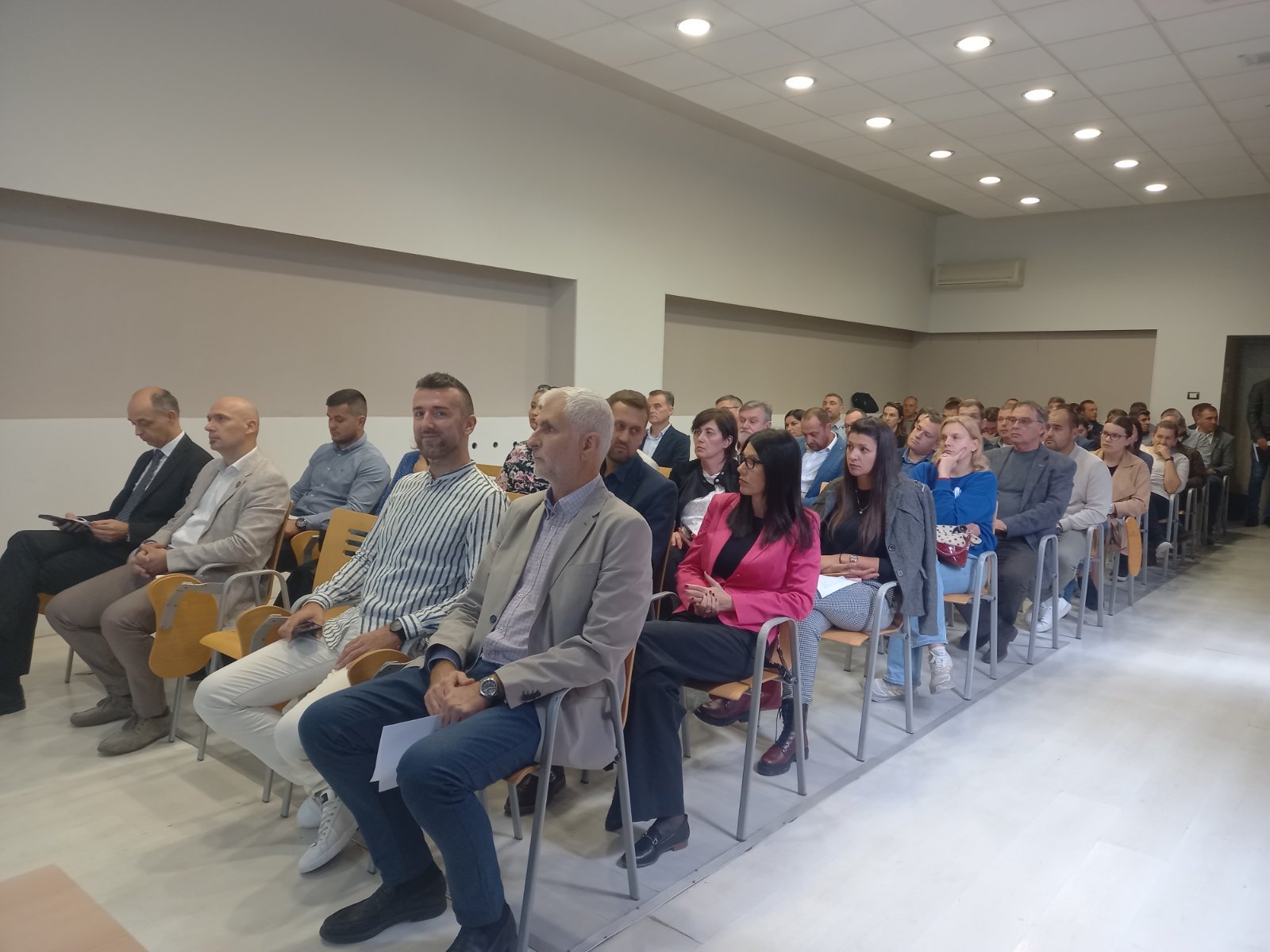
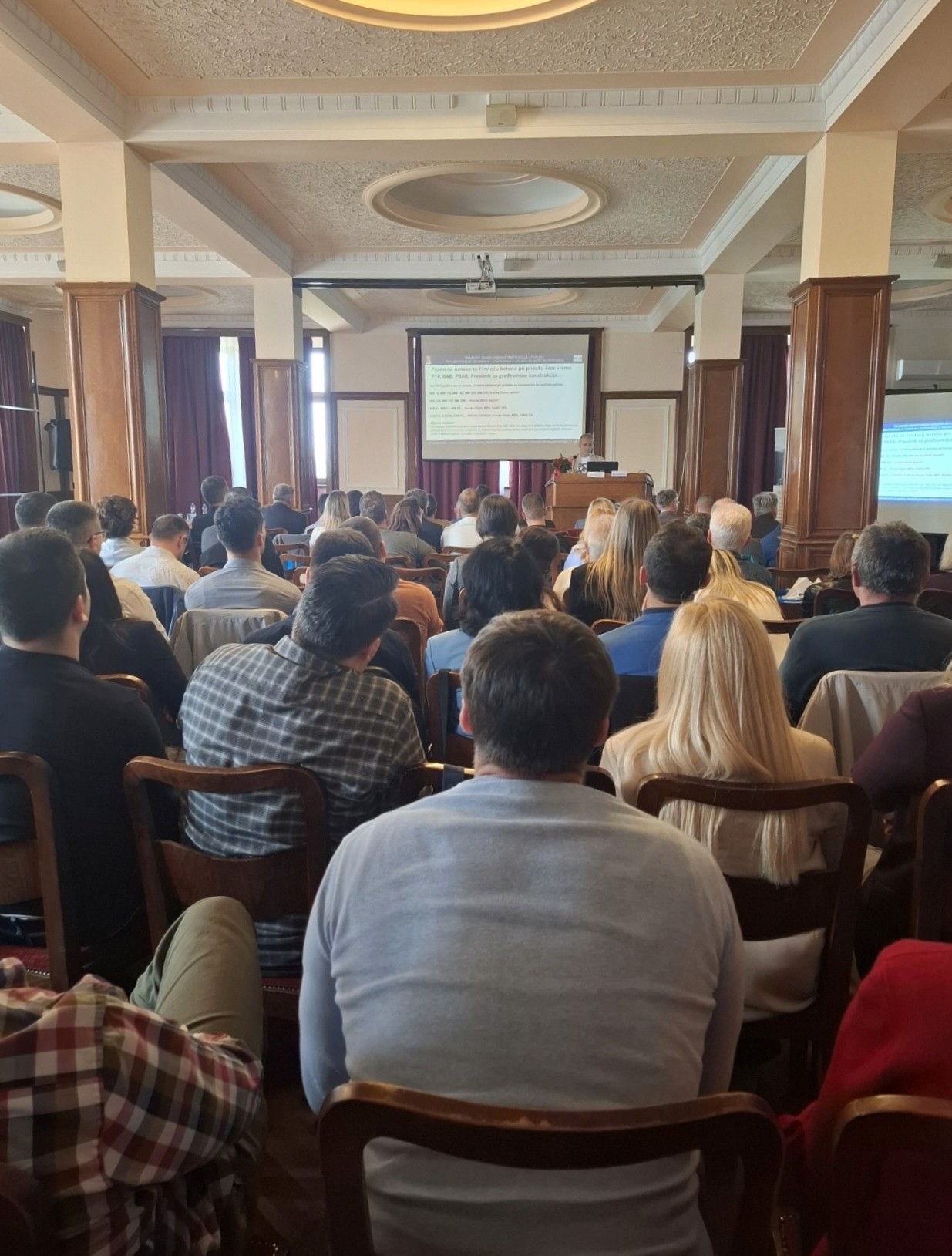
Conclusions of the Scientific-Professional Conference: "Current Trends in the Field of Materials and Structures"
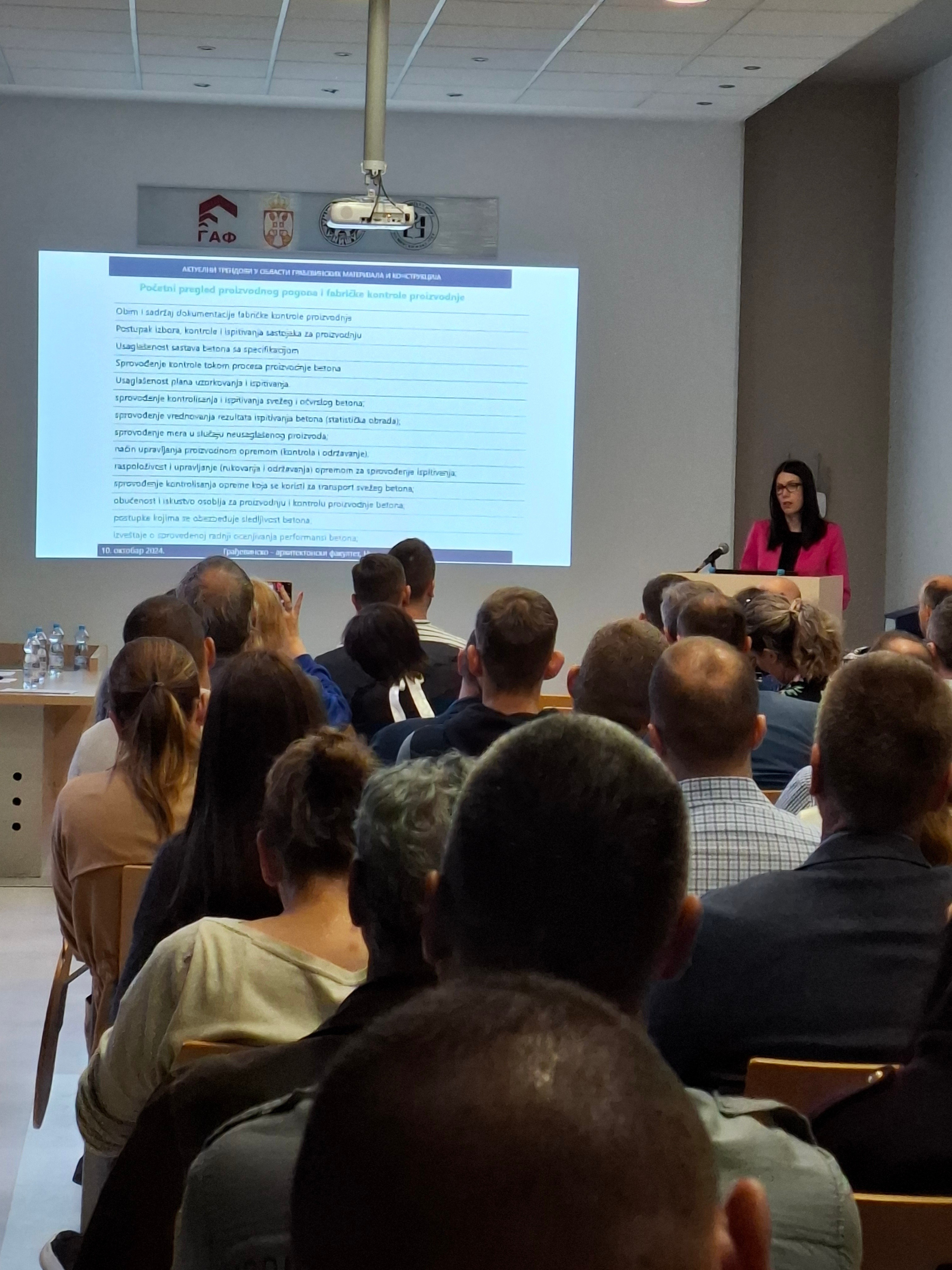
Conclusions from the scientific and professional conference: "Current Trends in the Field of Materials and Structures"
held on 10.05.2024 at the IMS Institute Belgrade and on 10.10.2024 at the Faculty of Civil Engineering and Architecture in Niš
With the adoption of the Rulebook on technical requirements for concrete, all responsibility for placing concrete on the market is assumed by the concrete manufacturer, who states the concrete's performance in relation to its essential characteristics in the declaration of performance, thereby confirming its conformity with the prescribed requirements. The Rulebook brings additional requirements for the manufacturer regarding the implementation and documentation of factory production control, as well as the issuance of documents (declaration of performance, delivery note, technical documentation, etc.). Also, adaptation to the requirements of the Rulebook will, in addition to investments in material and human resources, require certain adjustments and a change in the awareness of manufacturers regarding the production and control of concrete. In this regard, it is expected that the manufacturer will need assistance in the area of education and the preparation of factory production control documentation. Increasing the obligations and responsibilities of concrete manufacturers in the process of assessment and verification of constancy of performance will bring significant improvements to this sector of construction products, in terms of quality improvement and a higher degree of safety of the concrete made available on the market.
3D concrete printing technology has progressed significantly in the last couple of years as a response to the introduction of digitalization and automation of processes in construction, as well as to architectural demands for free forms that have significantly raised the share of formwork cost in the total price of the structure. Based on a large amount of research, appropriate testing methods have been defined for the properties of 3D printed concrete in fresh and hardened states. Numerical models have been developed that simulate the printing process and serve to verify experimental research. There is a small amount of research on finished elements and structures, mostly only vertical load testing has been performed. Further progress requires solving open questions such as the standardization of the entire process from testing the properties of the mixture, design to the execution of these structures, and especially the incorporation of reinforcement. The main disadvantages are the large amount of cement for making the mixtures and the fact that the size of the printer itself dictates the dimensions of the object that can be produced. Practical application so far has been closely linked to the cooperation of the industry with the scientific community, in the sense that before every major practical application, both the mixture and the finished elements were tested in laboratory conditions. In the Republic of Serbia, the practical application of 3D printed concrete is not particularly pronounced, and 3D printing mixtures from the manufacturer SIKA can be found on the market. For the further development of this technology, greater interest from business entities and initial investments in equipment, i.e., printers, are necessary. Generally, 3D concrete printing technology is a reality on a global scale, and with the elimination of the mentioned drawbacks and solving of challenges, its application in modern construction will become increasingly widespread. In any case, 3D printed concrete technology is not intended for the mass construction of multi-story buildings, but should be adapted for prefabrication and achieving challenging architectural forms in structural and non-structural elements.
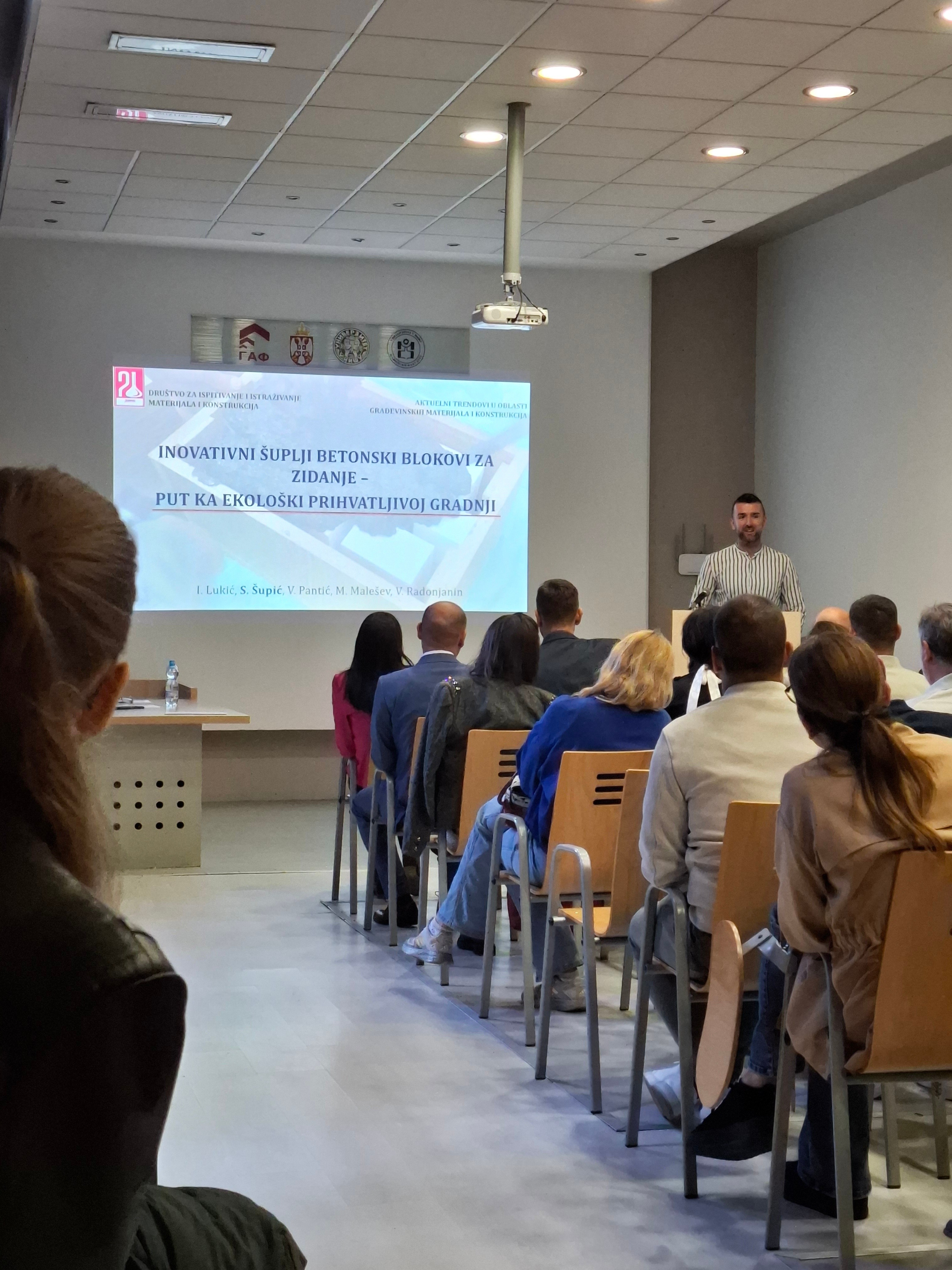
Concrete masonry blocks made of lightweight aggregate and with the addition of waste powder materials as a partial cement replacement represent innovative ecological products. Experimental research has determined that blocks with cavities filled with EPS-based thermal insulation material, in which three types of lightweight aggregate or recycled crushed concrete were used as aggregate, and about 50% of the cement was replaced with fly ash or bio-ash, have satisfactory compressive strength, so they can be used for building load-bearing facade walls or for facade infill walls in skeletal structures. The thermal conductivity value of the analyzed blocks is such that, without additional thermal insulation, it allows their application in areas with a mild, very moderate climate like the Mediterranean, while in areas with a colder climate, an additional layer of thermal insulation is required. The dimensions of the block were adopted so that, compared to classic masonry blocks and bricks, a greater speed of work execution is achieved, and thanks to the fact that fewer blocks go into 1m2 of wall and that they fit together on the tongue-and-groove principle, the number of thermal or cold bridges through which heat is lost from the building is reduced. The surface of the blocks is smooth, which reduces the need for additional plastering, meaning only the final finishing of the wall surface is possible. Based on all the analyzed parameters, block D can be adopted as the most ecologically acceptable type.
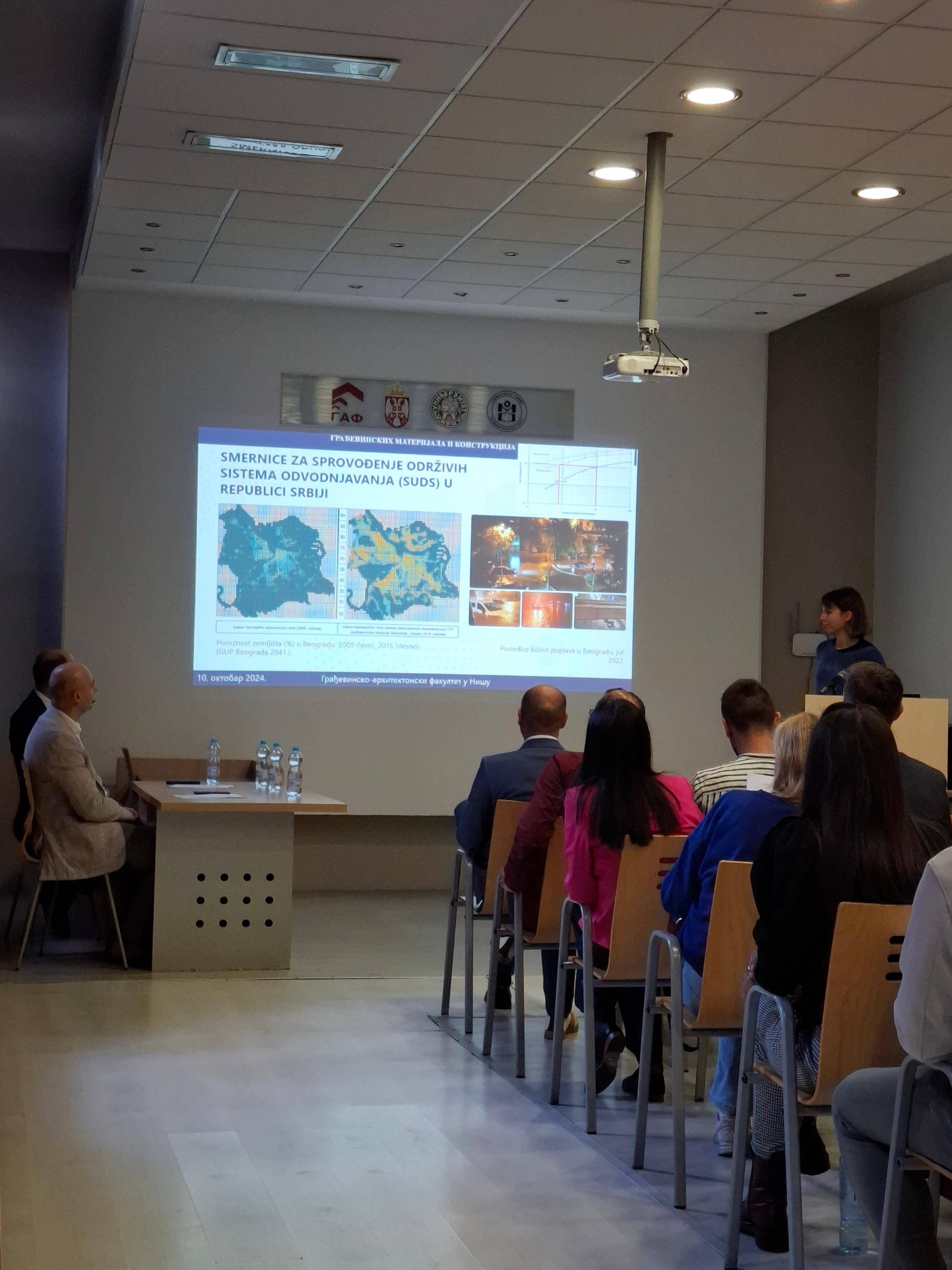
Improving sustainable construction through the use of waste materials in pervious concrete represents a good step towards building urban areas adaptable to rain floods. The integration of circular economy principles into urban drainage and urban plans for the further development of modern cities contributes to reducing the amount of waste materials that end up unused in landfills and at the same time provides an effective solution for adapting urban areas to changed climate conditions. The potential of pervious concrete as a construction material is reflected in the possibility of using it for effective surface runoff management at its source and water infiltration into the ground, while simultaneously reducing the risk of rain floods in urban areas. Using waste materials as an additive to pervious concrete further enhances the sustainability of the idea of applying CE principles in urban drainage by providing an alternative to traditional, resource-intensive materials. The implementation of this technology requires a multidisciplinary approach involving cooperation between science and industry, engineers, urban planners, and local authorities. Through alignment of regulations, research support, and education, an environment can be created that encourages innovation in sustainable construction and contributes to creating cities for future generations. In this sense, improving sustainable construction through the use of waste materials in pervious concrete represents a step forward towards achieving the sustainable development goals, creating urban areas that are adaptable to changed climate conditions, but at the same time safe from an environmental protection standpoint.
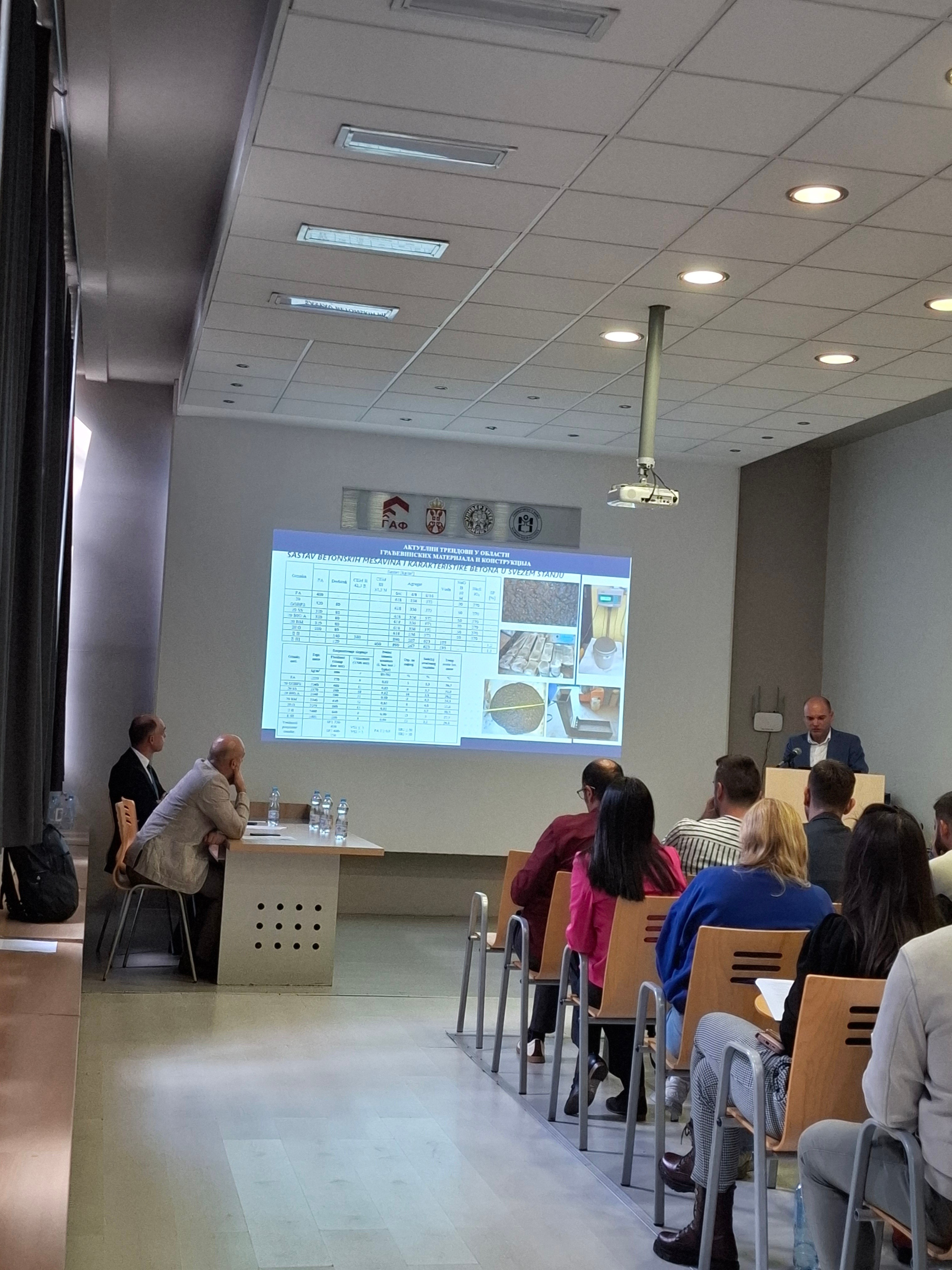
In order to reduce the amount of waste, solutions have been offered that would enable the integration of waste and recycled materials into new products, thereby providing them with a new utility value. Recycled cathode ray tube glass can be successfully used to make the wearing course of concrete blocks and tiles, as it improves the properties of the wearing layer of these products, and on the other hand, contributes to aesthetic value. Also, self-compacting concrete with the addition of recycled cathode ray tube glass can be considered suitable for the production of prefabricated concrete elements such as concrete curbs whose cross-section does not exceed 300 cm2.
The application of waste vitreous enamel in concrete, as a partial replacement for cement, on one hand contributes to a slight reduction in mechanical properties, while on the other hand, it does not compromise the durability of the concrete. The physical and mechanical properties of concrete made with waste enamel in amounts up to 20% do not differ significantly from reference concrete, primarily the compressive strength, as the most significant characteristic of concrete. By testing the influence of a partial replacement of cement with waste vitreous enamel in the amount of 15% by weight on the characteristics of concrete paving blocks, it was confirmed that these blocks can be used in practice without any restrictions.
Geopolymers are a relatively new type of material developed in recent decades. In developed countries, they are applied on a mass scale, while in our country, they are still at the level of scientific research, without serious participation in practice. In general, geopolymer mortars and concretes can be an adequate replacement for traditional cement composites. Replacing part of the fly ash with other industrial by-products has a positive effect on certain characteristics of mortar and concrete. However, more important than all tested characteristics is the ecological side of geopolymers. The use of industrial by-products that form the basis for making geopolymer mixtures helps to reduce local waste. Also, the implementation of geopolymer mixtures made on the basis of fly ash and with the addition of granulated blast furnace slag, converter slag, wood biomass ash, red mud, and waste glass will reduce harmful environmental impacts and CO2 emissions. The concrete in question showed good resistance to sulfates and wear, and could be used as concrete for making concrete slabs, blocks, drainage channels, or underground parts of buildings that will not be exposed to low temperatures. To practically confirm this possibility, it is first necessary to expand existing legal regulations and standards that would define their use. In order to solve this problem, it is necessary to conduct a series of identical tests in order to standardize geopolymer composites.
The amount of waste (defects) generated during the production of ceramic products in the construction industry is not negligible and amounts to between 15-30% of total production. The use of ceramic powder, obtained by grinding ceramic waste, as a replacement for part of the cement, stands out as particularly significant from the perspective of the cement industry's striving for sustainability by reducing clinker production through the use of alternative materials. Experimental research was conducted on the possibility of using ceramic powder, generated by crushing waste from the ceramic industry of Vojvodina, as a potential SCM material in modern masonry mortars. The results showed that replacing cement with ceramic powder reduces the workability of the mortar mixture, which is a consequence of the shape of the ceramic waste particles after mechanical crushing and the higher absorption capacity of coarse structural ceramics. With an increase in the level of cement replacement with ceramic powder, capillary porosity increased, resulting in higher capillary water absorption and lower mechanical properties of the mortar. Nevertheless, certain mortars met the conditions for application in masonry mortars for load-bearing walls (a class corresponding to an average compressive strength of mortar of 5MPa). From the standpoint of adhesion and vapor permeability of the mortar, it was shown that replacing cement with ceramic powder does not have a major impact on the analyzed properties of the mortar. Replacing part of the cement with locally available waste materials is, in this environmental context, highly desirable. The analysis shows that by replacing part of the cement with ceramic waste, significant reductions in CO2 emissions can be achieved (up to 40%). The general conclusion is that the application of ceramic powder in optimal quantities in the production of masonry mortar can not only provide important ecological advantages but can also improve the mechanical and durability properties of these composites.
Analysis of the environmental impact of products and processes must be integrated into various types of decisions in modern industry and legislation. When looking at the environmental impacts of construction products and processes, it is vital to study them in the form of the product life cycle, in order to avoid shifting problems from one part of the life cycle to another and/or from one geographical area to another. The life cycle assessment of products and processes (LCA) is directly followed by Environmental Product Declarations (EPD) and the Product Environmental Footprint (PEF) in accordance with the rules of the European Commission, then CO2 emissions assessment, quantification of the Product Carbon Footprint (CFP), and the issuance of permits for greenhouse gas (GHG) emissions. Current activities and updates regarding databases, quality assurance, consistency, and compliance of methods contribute to the entire spectrum of previously mentioned activities. By 2026, the Republic of Serbia needs to have a functional system for monitoring, reporting, and verifying greenhouse gas emissions in order to meet its obligations under the Paris Agreement and prepare for the implementation of the carbon border adjustment mechanism (CBAM) introduced by the European Union starting from 2026. In accordance with the above, it can be concluded that assessing the environmental impact of construction products and processes entails the necessity of communication between interested parties (stakeholders such as manufacturers, EPD program operators, LCA practitioners, decision-makers, etc.) and the development of new bodies for certification and verification of documents aimed at decarbonization, green production, lower GHG emissions, and sustainability in all sectors, especially in the construction sector.